I have written a poem-prayer that came from my trying to process the senseless deaths of Calyisse Perkins and Fitzgerald Phillips, both 19 and students at Southern University New Orleans. They pair dated, and in the wee hours of Sunday morning, April 19, two thugs abducted them and sent a request for $10,000 ransom via Phillips' cell phone to the parents. Today NOLA police discovered the teens' bodies in an abandoned house in Gert Town, and despite the police saying earlier that was no drug connection, today they say Phillips may have known his and Calyisse's murderers through a marijuana connection. Read earlier blog post/story here.
Greek Tragedy in Black
By Nordette Adams
I saw her on the news this morning,
Calyisse's mother, pleading for her daughter's safe return.
She could not understand why anyone would harm
her baby, 19, who'd hurt no one. And
this mother had no money to pay ransom.
Their lives held promise, young lovers in college,
but I am guilty of a hopeless heart.
I did not believe Calyisse breathed.
Nor had faith Fitzgerald, the boyfriend, lived.
The stench of a killer's lies lingered,
to ask for ransom when the body's cold.
And Sheila Reneau, the mother, wept. And I wept
when they found the bodies hidden in an empty Gert Town house,
two black teens murdered by two black adult males and cast
into an abandoned shack like garbage.
Lord, You sit high but look low.
and see that the heart of man makes evil.
You, the Creator of all.
And you say to us Fear not.
Forgive me, Lord. I am afraid.
Forgive me, Lord. I am angry.
Forgive me, Lord. I want blood--
an eye for an eye, a tooth for a tooth--
My heart trembles with rage at this evil done to teens
dreaming dreams.
And my heart gazes at the mountaintop, looking for
her mother and his mother, and our brothers and sisters,
our aunts and uncles, for the circle of elders.
We seek a place of solace, sanctuary
from this Evil that roams our streets,
drunk on our children's blood.
The streets of Gert Town howl a too-familiar blues.
Souls fold over sobbing, ripping with wails.
Houses flood with wailing mothers' tears,
and NOLA's soul goes low, almost into the coffin.
I should go to these women and add my tears to a river in Gert Town.
I should find Sheila Reneau and hold her to me.
I should find Fitzgerald's people and let
our grief flow into the streets, swell and flood the city until
our tears reach Your throne.
She is every mother and I am every mother.
We bury our faces in hands ill equipped to fight.
We see a new monster. We have not seen so hideous a creature before
that jigs down our streets, picking the fruit of our womb from its teeth
with our ancestors' bones.
I hold my children to to my breast,
chilled at the rustlings of death.
But Calyisse's mother is missing a daughter
and Fitzgerald's mother is missing a son.
We crawl through blackness listening for a flutter of wings.
Send angels, Lord. Let them bring us flaming swords.
(c) 2009 Nordette Adams
Monday, April 20, 2009

Friday, April 17, 2009
Does Lil Wayne's Sexual Assault Influence His Art?
 Having read yesterday that rapper Lil Wayne was sexually assaulted as a child and recalling that he is from New Orleans, I've been mulling him over. Whether we approve of rap or not, think it's art or don't, rap lyrics still fall within poetic literature. So, how has Lil Wayne's life informed his art?
Looking at some of Lil Wayne's lyrics, such as those for "A Milli," off his CD Tha Carter III, I can see that his life, what he's been exposed to as an African-American male and as a son of New Orleans, influences his work, even in word choice. Using the French word derriere for a woman's behind, for instance, reminds us New Orleans is associated with French culture, but then he misspells the word, reminding us that he's a high school dropout and that education systems all over urban America are in trouble. ... Please continue reading at the New Orleans Literature Examiner.
Tuesday, April 14, 2009
The Ebony Experiment: Stop Asking 'Is it Racist?'
When John and Maggie Anderson of Oak Park, Ill., started The Ebony Experiment on January 1 of this year, they thought of it as "an academic test about how to reinvest in an underserved community and lessen society's burden." For one year the family has pledged to buy everything they possibly can from black-owned businesses--health and beauty supplies, gas, clothing, food, books, medical services, etc.
They moved their personal accounts to Covenant Bank in Chicago, but have been unable to switch their mortgage and student loans to black-owned financial institutions. And they haven't changed utility companies. (The LA Times, Family buys black for one year)The Andersons hope to strengthen African-American communities, to build wealth in black neighborhoods, and encourage economic independence and responsibility. John Anderson told the LA Times last month, "When a thriving African American or urban community is realized, certainly as a society as a whole we all win."

From The Ebony Experiment website.
So, you'd think everyone, seeing the crippled state of many black communities in America--hearing of the crime on the nightly news, reading about the higher rates of unemployment, learning of the crisis in inner-city education--would cheer the Andersons on, but you'd be wrong.
In addition to watching the CNN video above, you may also see at Electronic Village an MSNBC interview with the Andersons in which the couple addresses common criticism of the project. In it Mr. Anderson says it's not about exclusion but about self-help economics and that he and his family are guinea pigs in a study. The Ebony Experiment website has other interviews posted, including one with the Urban League that's also at YouTube. In that interview they stress that they hope to dispel the myths about black-owned businesses. I assume they mean the stigma of inferior services and quality associated with black businesses.
While some people wonder how can they join the Ebony Experiment, others off-handedly declare it racist and against the teachings of Dr. Martin Luther King, Jr.
Limiting yourself to stores based on the criteria of race and not quality of service or merchandise is, of course, racist but also runs the risk of supporting stores that might not be worth saving. That's one of the reason I avoided the Christian stores, I would rather base my purchase on quality, not some claim to kinship that may or may not be true. (Reformed Chicks Blabbing)I don't think the writers at Reformed Chicks Blabbing, a blog on Belief.net, are women of color, and so the call to participate in the Ebony Experiment is not made to them. You know, sometimes you have to know if you are the person to whom others are speaking, and if you're not and what's being spoken of doesn't harm you, then let it go.
Ironically, the declaration that The Ebony Experiment is racist is the knee-jerk response of people who see in black and white and think to be color-blind is to be free of racism. They are wrong!
Another faith blog written by an African-American male shares a broader, more informed view:
In today’s crippled economy, is there a place for the Kwanzaa principle of Ujamma, or cooperative economics? ... This issue elicits many questions, particularly the one alluded to in the excerpt above concerning the criticism that if members of the white community promoted something as brazenly separatist and racialized as this, they would be immediately castigated as racists. And that suggestion of a double standard is understandable. Yet, whether we agree or disagree with that contention, I think it’s important to acknowledge the complexity of our national history around the issues of race, slavery, segregation, and social justice. Though we’ve long since repudiated and attempted to move forward from our nation’s biggest failures on the matter of race, a lot of the residue of our failures continue to inform our personal and institutional relationships today. To ignore that fact only hinders our efforts toward true progress and reconciliation. (Ed Gilbreath at The Reconciliation Blog)A note at the end of the full post attempts to put this topic in the perspective of Obama's win and so-called "post-racial" America.
I keep hearing about post-racial America in the Age of Obama and while I loathe the "Obama the Magic Negro" song, as I listen to people go on about the end of racism in the Obama age, I see the validity of some points David Ehrenstein made in his opinion piece, the one that supposedly inspired the offensive jingle. There are Americans out there, mostly not people of color, who think Obama's election induced a mystical exorcism of all things racist. They're deluding themselves.
Since I've mentioned Ehrenstein, let me add that people who can't separate the insulting song from Ehrenstein's commentary seem to be stricken with a Boolean logic mentality that strips them of complex thought. There is no magic potion for racism and the evils it births, and under magic potions and fairy tales fall notions of a color blind society, one black savior, paternalistic white knights, benevolent plantation masters, that American economics is pure capitalism, and the ideology that all humans are tubs that must only sit on their own bottoms and never get help from other tubs. But back to the Andersons' undertaking.
I appreciate Ed Gilbreath's reference to the Kwanzaa principle Ujamaa, with the exception that invoking Kwanzaa gives the impression that cooperative economics within the black community is a concept as young as Kwanzaa. In the early 1900s Marcus Garvey, a Jamaican immigrant, built the largest African-American organization in history promoting black economic independence. Before Garvey, educator Booker T. Washington, author of Up From Slavery, was "an advocate for African American economic power" in the late 1800s, reports a scholar quoted at the LA Times.
Today the world has shrunken, and so it's unlikely any group can ever claim true economic independence again unless it's in its own nation behind impenetrable walls. We are all connected, as the current global economic crisis makes clear, but prosperous black communities is a dream that can be followed and claimed. Yet, how can it come to pass if more African-American men and women don't succeed at owning their own businesses and use their business skills to cater to the needs of African-American communities the same way that the Italians have, the Irish have, the Jewish people have, the Asians have, etc.?
Comments from Jack and Jill:

Slavery, Segregation and Economics
Slavery prevented African-Americans from having the experience of building the ethnic economic base that other groups have built in this nation. Upon their arrival, blacks were immediately stripped of cultural identity--language, customs, family connections, control of their own bodies, and whatever material wealth, even the grit of African sand--was stolen. The abolition of slavery, the demolition of segregation, did not magically restore these losses. Neither does the election of a black president.
So, when I saw the Andersons' story and read that the family has received hate mail accusing them of racism and threatening to not ever buy from black businesses again, I wasn't alarmed. Boycott, I thought, Princess Bride revisited, joins the word "Inconceivable!" Boycott ... "You keep using that word. I don't think it means what you think it means."
A white person supposedly speaking for other white people threatening a boycott against black business is the perfect example of a fool speaking and removing all doubt that he is a fool.
The threat sent to the Andersons reminded me of hearing Pat Buchanan on a local talk show, The Austin Rhodes Show, in Augusta, Ga., in the 90s, ranting about either Jesse Jackson or Al Sharpton calling for a boycott of businesses. Buchanan blustered, "I think that we (whites) should boycott black businesses!"
I asked for a tape but was told, just minutes after the show ended, that they'd lost it; however, hearing Bucahanan say whites should boycott black businesses was enough to convince me he may have mental issues.
If you're not African-American, tell me now how many times have you purchased your car, clothes, groceries from a black-owned company? How often do you open a copy of Black Enterprise magazine?
If you exclude Motown, even much of the music you may have purchased by black recording artists did not come from a black-owned recording studio and distributor. Motown itself is no longer a "black-owned" business. So, unless you buy lots of HipHop from independent producers, it's unlikely that even your entertainment comes from a "black" company. How can you boycott something you don't use anyway? And no, Oprah doesn't count here. The point being made is not that white people should feel guilty for not "buying black," but that white people who make stupid statements like "I'm not going to buy anything from black businesses" because the Ebony Experiment is racist or label it racist show that they're out of touch with reality.
Just as any specious "white power movement" is a redundancy of the predominant social system, attempts to assert "buy white only" is a redundancy of the predominant economic system despite the rise of China. The perception of some whites that the Ebony Experiment is racist is another example of blindness to privilege. Having no conscious sense of the power of white skin and wealth, some whites misinterpret black empowerment and any search for black independence as racism, meaning the same method of oppression white institutions have employed for years against people of color, but it's not the same.
A blogger who seems to have a similar view is Renee at Womanist Musings. After posting objections to The Ebony Experiment she found at The Black Informant, she writes:
The resounding theme in the above commentary is white panic and a denial of white privilege. I personally love the question of what if whites only supported white owned businesses? Since the majority of the business in the United States are owned by white people chances are you already do. You will further note that the WET (white entertainment network) argument made its usual appearance. When I see this supposition, I often want to ask about the status of ABC, NBC, CBS, CNN and in particular FOX news; they clearly are not devoted to promoting diversity either in their news, or entertainment programming and BET which is barely managing to stay in business is a threat. The bottom line is that unless something unfairly promotes whiteness it is deemed racist by those that are determined to maintain undeserved white privilege. (Renee at WM)Just how many people slept through history class is what I've been wondering. Since I first heard about the Ebony Experiment in March, history and how we arrived at this point in time, has poked me.
America was once a legally segregated nation. As a result, there were businesses within the black community owned by black people that thrived, but a stigma clung to them. Blacks went to black-owned establishments because they had no place else to go that wouldn't force them to sit in the back or enter through the kitchen door. Entry into white establishments was forbidden and as a result white businesses carried the mystique of a wonderland. Conversely, black businesses were viewed as inferior.
When segregation ended, blacks could shop and eat wherever they wished and so flocked to what had once been taboo, abandoning black business owners who had served them for decades, assuming they had arrived at a better place. Or, as scholar James E. Clingman told The Times, blacks "began patronizing white-owned businesses under the misconception that buying white signified blacks' upward socioeconomic mobility."
Another casualty of segregation was the reputation of the black professional who had been educated in black schools. Separate was not equal. My parents and grandparents could see that with the raggedy books that landed on their school desks, torn and worn by white children who used them first. The perception grew that white children received a better education, which was true in many ways, and the consequence was that white professionals educated in white schools were assumed to be superior to black professionals educated in black schools.
I remember my grandmother saying that she wouldn't go to a black doctor. Later I understood it was because she believed the white doctor was not necessarily smarter but that the white doctor had access to the latest in equipment and the best medical schools.
But let's go with the positive side of the Anderson story. According to the LA Times, the hate mail they've received is a small part of the Anderson's correspondence. Most of the comments have been supportive--"people see the endeavor as beneficial to all."
The Andersons' story also appears in the Chicago Tribune.
Look for this post to be cross-posted at BlogHer.com later. I decided to add this post to The Urban Mother's Book of Prayers because strengthening the black community's economy will directly impact the quality of city life because many major cities have large black populations.
Saturday, April 11, 2009
Terrytown Murders, Toddler Shot in Head (Poem-prayer)
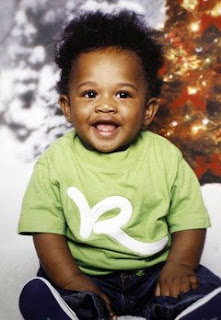 The poem-prayer that follows this introduction and news excerpts is written in response to a horrific multiple-murder case in Terrytown, a New Orleans metro area suburb. Here are excerpts from stories about the tragedy.
Fortunato said authorities believe two unidentified men entered an apartment in the area and "executed" a 23-month old male toddler and the baby's 19-year old mother. Wielding handguns, the men also shot a 6-year old boy and 11-year old girl who were in the home. The 6-year old died en route to University Hospital, while the 11-year old remains in critical condition. (Writer, Allen Powell II at Times Picayune, April 11)Per the Picayune story, witnesses said two men in dark clothing kicked in the door and began shooting, and "authorities also located crack cocaine and marijuana in the apartment."
I agree with a woman who identified herself as the toddler's aunt to Powell,
"Whoever did it was lowdown," the woman said. "These children don't know about what's happening. ...They (the shooters) just don't have a soul."And then the story gets worse, the grief-stricken young mother of the dead 6-year-old is tased by the police.
The mother of Four Overstreet grew irate with authorities when she arrived at the Monterey Court apartment where the rampage happened before 4 a.m., Saturday. When she got physical, deputies stunned her to bring the situation under control, Col. John Fortunato said.WWL TV reports that the frantic mother and her boyfriend were arrested and characterized them as "fighting" with the police.
... Four died at the hospital from a gunshot wound to the head.
Robert was also shot in the head. Sterling was shot in the back, and the 11-year-old suffered multiple gunshot wounds to the body, Fortunato said. (more of the story at this link)
Rayshika Overstreet, 29, Four's mother, who arrived on the scene later, was subdued with a Taser after she became belligerent with police and struck an officer and struggled with another officer, police said.According the newspaper, 19-year-old murder victim Dominique Sterling had been baby sitting the 6-year-old who died and the 11-year-old who survived for Overstreet. However, the child pictured in this post is toddler Robert Claiborne, Sterling's son. Sterling's relatives say that she recently moved to the neighborhood, was doing a favor for Overstreet by babysitting, and that Sterling was not involved with drugs.
She was charged with interfering with the police, resisting arrest by fighting, battery on a police officer, contributing to the delinquency of a juvenile because of the narcotics seized from her apartment and possession of crack cocaine and possession of marijuana, police said. (WWL)

Like a Revelations Day
By Nordette Adams
When the lights go down in NOLA in the 3rd, in the 9th, in the 7th,
on streets not known for cultured gardens,
we hunch in corners, curl behind locked doors.
When the lights go up in NOLA, the city's staged with blood.
We stumble into her streets stuttering, hands stretched like blind men, fingers
fumbling at silver crucifixes, searching for the blank wooden cross.
We cry to believe that You came in flesh and escaped death for us all.
O' God, we need you, our fingers creep for the hem of your garment.
Our children fatten undertakers. POW! POW POW POW!
Is this what a last day is? Is this the last days we heard of,
that mothers and fathers would not know their children,
that children would hate brother and sister?
If a mother must go to one more funeral,
she will go into the grave with that child.
If a grandmother has to bail out one more son,
she will lock herself in the cell.
If a child has to dodge one more bullet,
will she clamor to meet her end?
O' Lord, we fall on our knees.
We fall on our knees and seek your face.
We seek your face, we wail at chaos.
Rein in evil, Lord. Counsel our souls to order.
(c) 2009 Nordette Adams
Wednesday, April 1, 2009
I See a Child's Blood (The Revelus Family Tragedy)
The blues has come knocking at my door, dour-eyed and dressed up in its finest death suit, drenched in children's blood. I speak of the Revelus family tragedy, horror in Milton, Mass., this past weekend. We step into April, the month of foolish jokes and poetry, just in time to see a 5-year-old's head, severed from her body, rolling through a living nightmare to the slashed body of her 17-year-old sister, a budding poet. These girls go into the grave next to the brother that murdered them.
Please continue reading the full post at Blogher.com.

Please continue reading the full post at Blogher.com.
Subscribe to:
Posts (Atom)